
Quantum-secured remote attestation
Trust nothing.Prove everything.
Quantum Lock uses entangled photons to prove, not infer, that the memory of a remote device has not been compromised. A new layer of the cybersecurity stack, grounded in physics.
01 / The problem
The blind spot at the edge of every network
Satellites, aircraft, drones and remote sensors are the lynchpin of modern networks, and you can't walk up to them to check they haven't been tampered with. Keeping them mission-ready means knowing, at any moment, that their memory has not been corrupted by an adversary.
Classical attestation
- ×Heuristics, statistics and fingerprints — an educated guess
- ×Every signal it checks is produced by the device the attacker may already own
- ×Secret keys can be extracted, cloned and replayed
Quantum Lock
- ✓A physical proof of memory integrity, not an inference
- ✓Entangled states cannot be cloned or forged — the no-cloning theorem is the guarantee
- ✓Secure even against computationally unbounded adversaries
 Remote platform · LEO
02 / The breakthrough
Attestation you can watch happen
One entangled photon stays with the verifier; its twin sits with the remote device. The device can only answer the challenge correctly if its memory is exactly what it claims to be. If a single bit has been altered, the correlations break, physics cannot lie.
// illustrative simulation of the Quantum Lock attestation protocol
Entangle
Verifier and device share pairs of entangled qubits, |Φ⁺⟩, distributed over fibre or free space.
Challenge
The verifier requests proof over a randomly selected region of the device's memory. No two challenges are alike.
Measure
The device measures its qubits in bases derived from its actual memory contents, the response is written by physics, not firmware.
Verify
Correlations either match quantum-mechanical predictions or they don't. A single altered bit breaks them, and the timing bound defeats proxies.
03 / The technology
A new layer in the cybersecurity stack
Quantum Lock complements existing defences with something no classical system can offer: physics-based proof that device memory has not been compromised. Every device we ship significantly outperforms the approaches available on the market today.
Entanglement-based authentication
Shared entangled qubit pairs replace secret keys entirely. There is nothing to steal, clone or brute-force, the protocol stays secure even against adversaries with unbounded computing power.
Remote memory attestation
Verify the integrity of a remote device's memory without trusting secure hardware on the device. A software-based approach that turns quantum correlations into proof of an uncompromised state.
Low-depth quantum circuits
Only rotations and measurements — no fault-tolerant quantum computer required. The protocol runs on quantum optics hardware that exists and ships today.
Distance-bounding security
Quantum teleportation enforces a physical distance bound, detecting collusion between a compromised device and a remote attacker. Proxying the challenge is ruled out by the speed of light.
 Photonics · today's hardware
Buildable now
No new physics required
The protocol needs entangled photon sources, single-photon detectors, fibre optics and embedded systems, components that are commercially available today. As quantum communication matures, the same architecture delivers increasing levels of security.
04 / Validation
Peer-reviewed, published, presented
The protocols behind Quantum Lock are published in leading quantum information journals — not just claimed in a pitch deck.
05 / The opportunity
A category of one
There is no other product on the market that can prove whether remote hardware has been compromised. Quantum Lock sits at the intersection of two growth markets — cybersecurity and quantum technology, with a defensible head start.
First and only
Classical tools infer. Quantum Lock proves. That distinction defines a new product category with no direct competitor.
Recurring revenue
Subscription pricing, mirroring the proven commercial model of leading cyber platforms.
Dual-use technology
Strategically significant under Australian Defence Export Controls, with engagement across defence, data centres and insurance.
Hardware de-risked
Built from commercially available photonics. US and European supply chain, assembled in Australia.
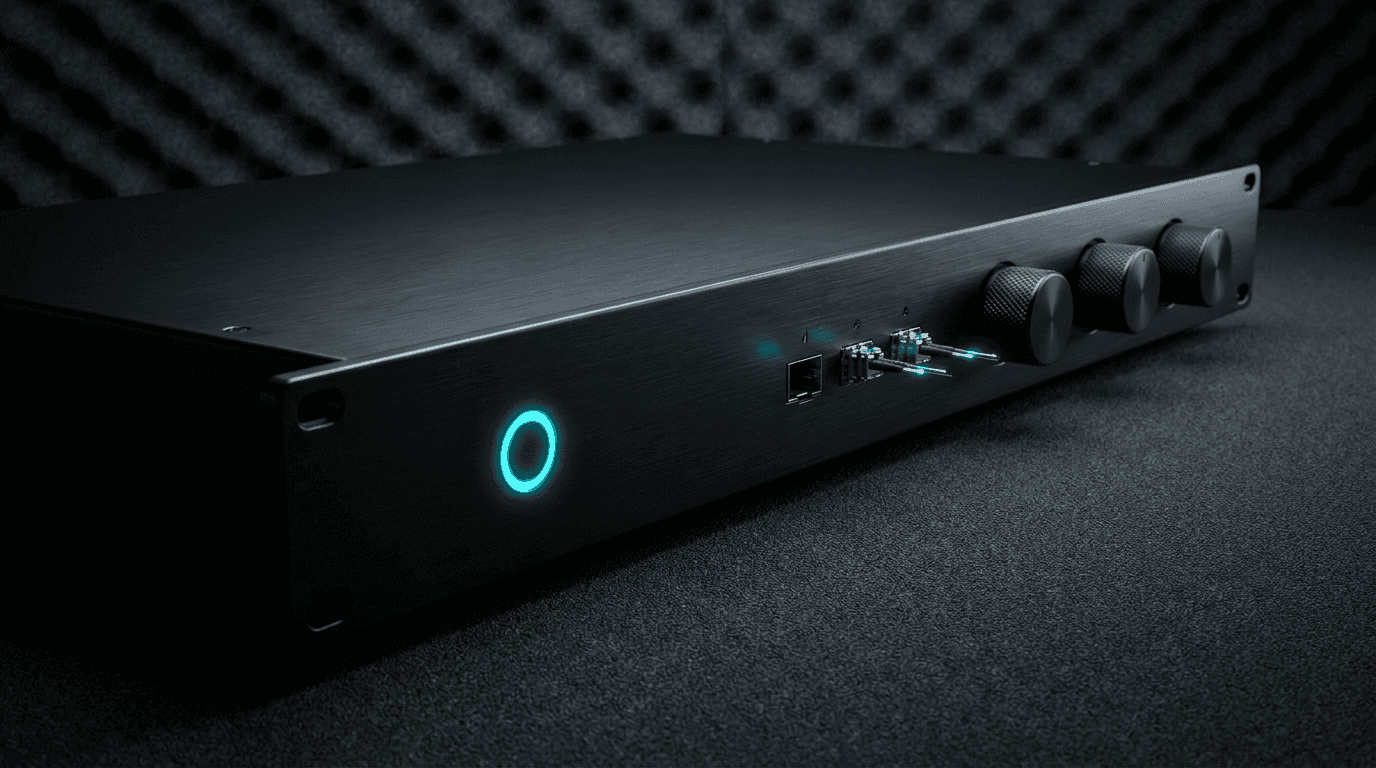 Quantum Lock appliance · product concept
Protocol peer-reviewed
Foundational paper published in Quantum Information Processing (Springer Nature).
Second publication
Quantum Remote Memory Attestation published in IET Quantum Communication.
First customer trial
Pilot deployment with an industry client on existing quantum optics hardware.
Global expansion
Scaling into all major cybersecurity markets as quantum networks mature.
06 / Leadership
Deep tech, deep bench
Founded on published research and guided by directors and advisors with decades of experience building, funding and governing Australian companies.
Board of Directors

Advisory Board




07 / FAQ
Straight answers
The questions investors and partners ask us most.
No. Quantum Lock is a unique quantum security device. It is not intended to perform arbitrary quantum computation.
Quantum Lock is being developed using already-existing quantum optics and associated technologies — no new physics is required.
Quantum Lock could achieve a customer trial in the later part of 2026.
Insurance brokers, data centres, defence — and even rollercoaster operators.
Quantum Lock is a dual-use technology and falls under Australian Defence Export Controls.
Our supply chain draws on US and European manufacturers. The final product will be assembled in Australia.
Entangled photon sources, single-photon detectors, fibre optics, embedded systems, and similar off-the-shelf photonics components.
Faster data transfer, faster convergence, and improved integration with SOC products across the first years after launch.
Any operator of critical infrastructure whose compromise would cause existential economic or strategic harm.
No other product on the market can prove whether remote hardware has been compromised. Classical endpoint security works via heuristics, statistical approaches, or fingerprints — all of which an attacker who controls the device can forge.
A subscription-based model, mirroring the proven commercial approach of leading cybersecurity platforms.
Quantum Lock is currently securing its intellectual property through a trade-secrets approach.
Yes — Quantum Lock will seek to expand globally into all major cybersecurity markets.
Quantum Lock will seek to engage with any external partner that could benefit from our unique technology.
08 / Contact
Talk to us
Investor, partner or critical-infrastructure operator — if the integrity of remote hardware matters to you, we'd like to hear from you.
QUANTUM LOCK · AUSTRALIA